Andrea and Nella’s marriage and separation
The Lying Life of AdultsAndrea and Nella’s marriage and separation form a prolonged family crisis that Giovanna encounters first through unspoken tensions and conflicting adult accounts, and later through the parents’ decision to live apart. Their split is not presented as a clean break: Andrea repeatedly returns to Nella, the couple remains bound by memories of earlier happiness, and their shared life continues to shape Giovanna’s loyalties and understanding of the adults around her.
Marriage Under Strain
Before the separation became explicit, Giovanna sensed that her parents’ interactions carried meanings they did not explain. During a family gathering, she watched Nella remain withdrawn while Mariano’s attention lingered on her; when the question arose of whether Giovanna would spend the night with Angela, Nella hesitated, while Mariano pressed for the arrangement and promised to bring the child home. Giovanna read the exchange as a negotiation with an unspoken significance, though she could not establish what the adults meant. The scene gives the marriage’s crisis its early form: what the child observes is real, but what it means remains hidden from her.
Later, after remembering a moment of apparent intimacy between Nella and Mariano, Giovanna refuses to tell Vittoria what she saw. She fears that Vittoria would interpret the scene through her own vocabulary and use it to condemn Nella, turning Giovanna into an informer in the conflict between adults. Her silence does not resolve the uncertainty. Instead, the marriage becomes part of a wider web of secrecy in which Giovanna must decide what to report, what to conceal, and which adult’s account to trust.
Conflict and Separation
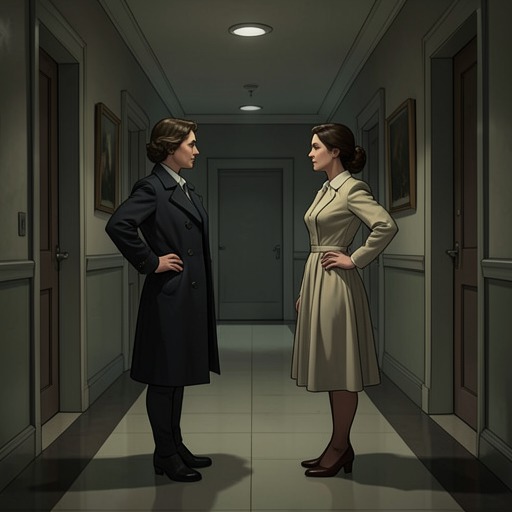
The breach between the households becomes visible in the violent argument between Andrea and Mariano. What had sounded to the children like another dispute about politics and intellectual work escalated into shouting and insults; Costanza left, and Andrea ran after her. Angela, Ida, and Giovanna could not initially explain the quarrel, but they understood that it involved the adults’ intimate lives rather than merely their familiar political debates. The friendship between Andrea and Mariano, once an established part of the families’ shared world, was now entangled with the marriage crisis.
Giovanna’s subsequent explanations remain uncertain and self-questioning. She imagines that Vittoria may have told Andrea what she had confided, and that the confrontation followed from that disclosure; she also tries to connect Nella and Mariano’s earlier closeness with Costanza’s departure. These are Giovanna’s conjectures, not a complete account of what caused the quarrel. The gap between what she witnessed and what she can know is central to her experience of the separation: adult relationships produce consequences that reach the child before their causes are made clear.
It took Andrea and Nella almost two years to decide to separate, although during that period they spent only brief intervals living under the same roof. Andrea disappeared for weeks without warning, leaving Giovanna afraid that he might have taken his life somewhere in Naples. She learned only later that he had been living in a house in Posillipo given to Costanza by her parents, while Costanza was in continuing conflict with Mariano. Andrea’s absences therefore carried a meaning Giovanna could not recognize at the time, and the eventual separation clarified only part of what had been happening.
Andrea’s Other Attachment and the Family’s Aftermath
When Andrea later explains himself to Giovanna, he describes his attachment to Costanza as a love that began before Giovanna’s birth. He says that for a long time he had regarded Costanza as a sister and had thought of his relationship with her as innocent, until a work trip altered his understanding of it. He presents the discovery as unexpected and insists that the two did not continue the relationship afterward; he also says that he had loved Nella for years and still loved her. His account makes the marriage’s history more complicated, but it remains Andrea’s account, offered during a period of family rupture rather than as an impartial resolution of it.
Andrea’s explanation also connects the family conflict to the bracelet that passed through the adults’ hands. He says that he considered it Costanza’s, wanted it for her after his mother’s death, and later gave it to Giovanna, asking Vittoria to pass it on. Giovanna had already associated the bracelet with the unexplained tensions between Nella, Costanza, and Andrea. His confession supplies a motive for his actions and a history for the object, but it does not make the family’s choices simple or erase the hurt they caused.
For a time, Andrea and Nella continue to return to one another. When Andrea reappears after an absence, he is affectionate and courteous, and seems to want to reconcile with Nella and Giovanna. The reprieve lasts only a few days before the couple begins arguing again. Despite their disagreements, both parents agree that seeing Vittoria is not in Giovanna’s best interests. Giovanna shares their view at that point and is exhausted by Vittoria’s hatreds, demands, and language; the parental restriction thus coincides with her own attempt to withdraw from her aunt.
Separation Without Emotional Closure
The parents’ separation changes Giovanna’s relationship with both of them, but it does not give her a settled interpretation of their marriage. She rarely sees Andrea, avoids his home in Posillipo, and cuts Angela and Ida out of her life. She tries to reassess her father by recalling the years when she admired him, hoping to understand why Nella remains attached to him despite what he has done. The effort is not simply a return to affection: Giovanna says she has little feeling for him in the present and tries instead to believe that her mother once loved someone of substance.
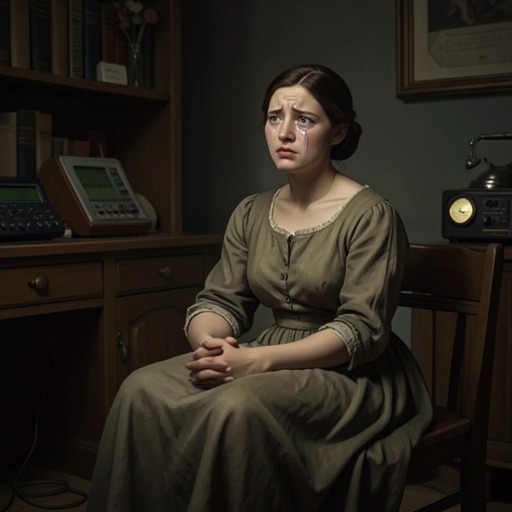
Nella’s own account preserves the contradiction between anger and attachment. When asked why she never says anything bad about Andrea, she distinguishes what she says from what she thinks, then admits that after dwelling on her thoughts she returns to the years when they were happy and forgets that she hates him. That recollection helps Giovanna understand why Nella’s bond has not vanished, but it does not reconcile the parents or restore their marriage. Their separation remains both a practical change in family life and an unresolved emotional history, one Giovanna must piece together from absences, brief reconciliations, confidences, and the adults’ competing versions of the past.